Intel's Lunar Lake Revenge: Taking on Apple's M-Series
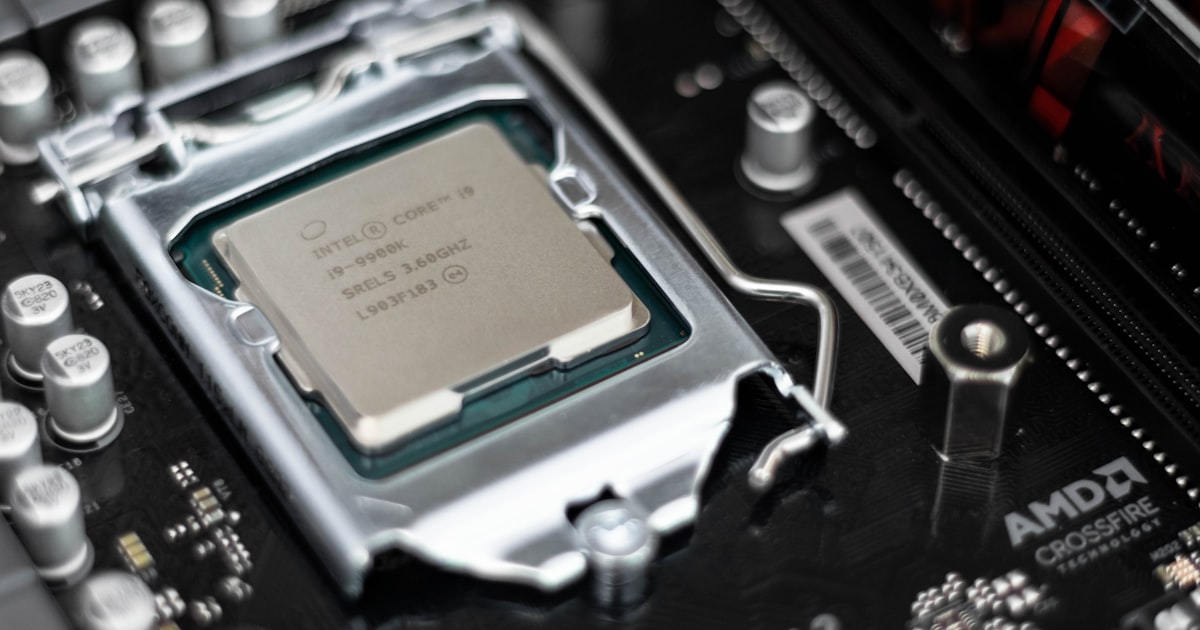
For the past few years, AMD’s Ryzen series and Apple’s M-series chips have dominated the laptop market. Especially since the launch of the M1 in 2020, the ARM-based architecture coupled with macOS integration left competitors like Intel and AMD struggling to catch up. Meanwhile, Qualcomm made strides with its Snapdragon processors, though mainly in the mobile domain, with some hope from Snapdragon X Elite in early 2024 for ultrabooks, which is set to storm the mid-range PC segment. Snapdragon X Elite’s AI-driven performance and efficiency have shown promise in bridging the gap between mobile and desktop computing.
However, this Tech-tember, Intel made a significant comeback with the launch of its Core Ultra 200V series (codenamed Lunar Lake). This release marks a major milestone, as Intel directly challenges Apple’s M-series by prioritizing single-thread responsiveness, integrated graphics, and battery efficiency in thin-and-light laptops, pushing the limits of on-package memory and hybrid architecture.
Let’s examine the architectural choices behind Lunar Lake and how it competes against the current landscape.
Hybrid Architecture: The Core Ultra 200V’s New Foundation
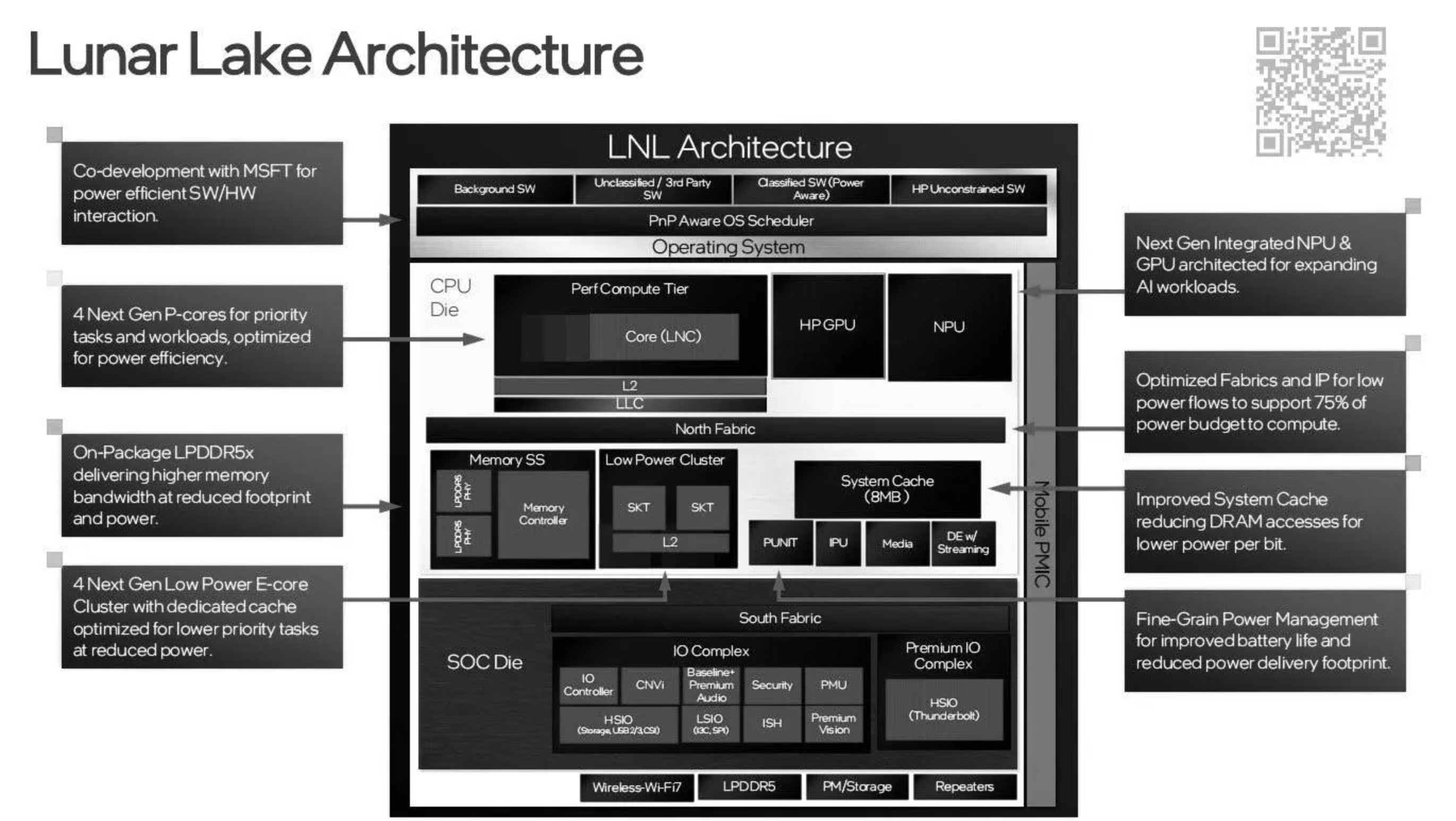
Intel’s Core Ultra 200V series introduces a new hybrid architecture that integrates Performance cores (P-cores) and Efficient cores (E-cores). This design is built to handle both high-intensity workloads and everyday tasks efficiently, providing both speed and power savings. The Thread Director dynamically manages task allocation between P-cores and E-cores, ensuring optimal performance and battery life.
Key Features:
- Thread Director: This technology intelligently manages core allocation, balancing workloads across P-cores and E-cores to optimize power efficiency and performance.
- Hybrid Design: By combining performance cores for demanding applications like gaming and video rendering with energy-efficient cores for lightweight tasks like browsing and document editing, Intel addresses both power efficiency and performance needs.
Intel’s hybrid approach parallels Apple’s M-series architecture, which also emphasizes efficiency through a combination of high-performance and low-power cores. However, Intel differentiates itself through its compatibility with multiple operating systems, including Windows and Linux, offering more flexibility for developers and IT professionals.
Challenges:
While Intel’s hybrid architecture is a significant leap, it faces challenges in software integration, especially when compared to Apple’s M-series, which benefits from the seamless coupling of hardware and macOS.
AI-Powered Performance: The Next Generation of Computing
The Core Ultra 200V series leverages NPU 4.0, a powerful Neural Processing Unit designed for on-device AI acceleration. This feature allows Intel’s chips to perform AI-driven tasks like real-time image processing, voice recognition, and machine learning without relying on cloud services, reducing latency and enhancing privacy.
AI and Performance Gains:
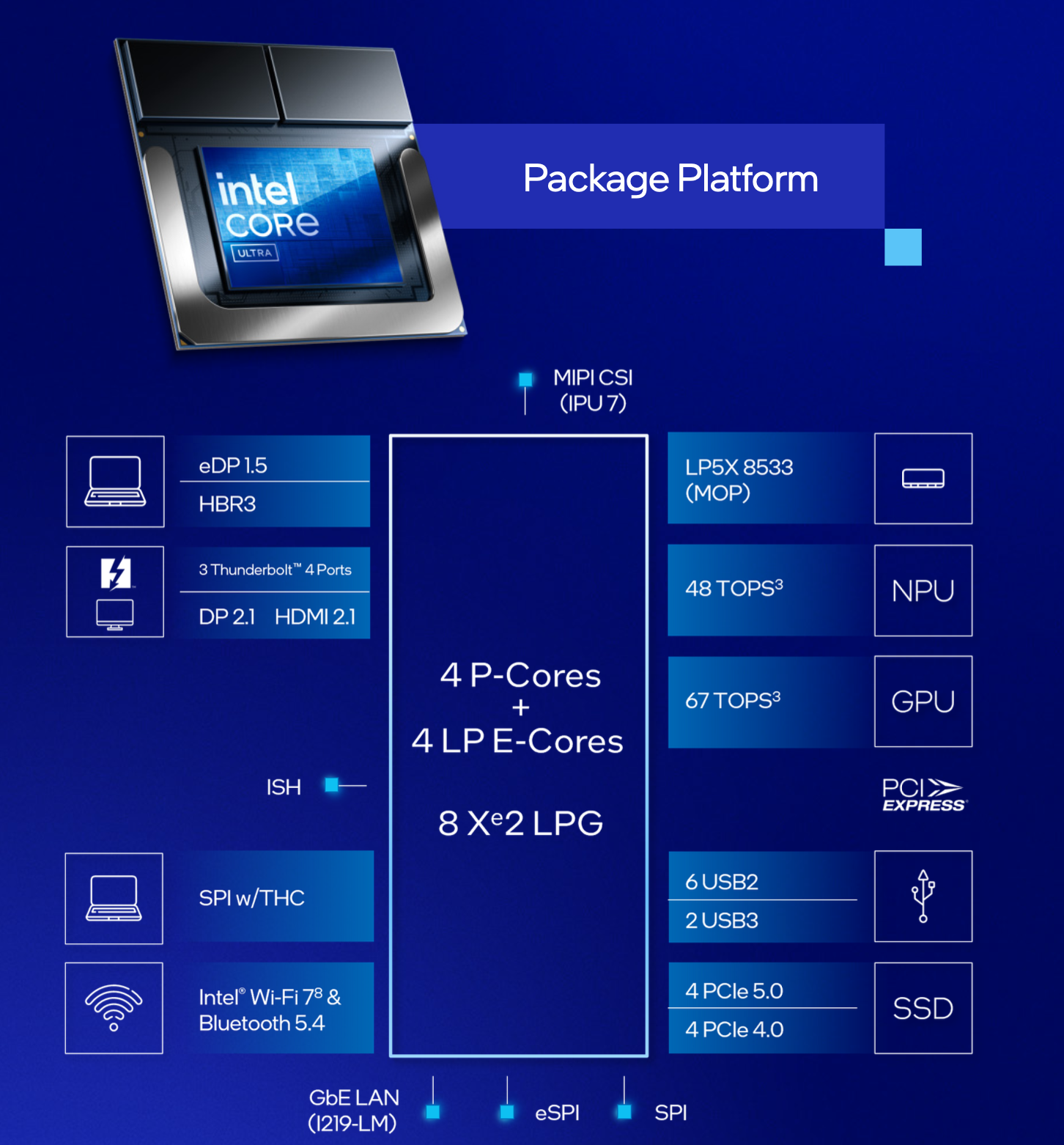
- NPU 4.0: Delivering up to 48 NPU TOPS (and contributing to 120 total platform TOPS combining CPU, Xe2 GPU, and NPU), Intel’s AI engine comfortably exceeds Microsoft’s Copilot+ threshold. It accelerates on-device AI workloads, making it ideal for content creators, data scientists, and business users who require local machine learning without cloud latency.
- Efficient Power Management: The Core Ultra 200V series introduces an improved power management system that reduces unnecessary power consumption by managing power delivery to the components that need it most. This leads to a 25% increase in power efficiency over previous Intel generations.
Intel’s use of PMICs (Power Management Integrated Circuits) ensures better control over power distribution across the CPU, making the chips more competitive with Apple’s M-series in terms of battery life.
Competition:
While Apple’s M-series established the modern benchmark for efficiency and single-core performance, retail Lunar Lake laptops demonstrated that x86 designs could finally rival leading Arm laptops in light-use battery endurance. However, because Lunar Lake omits Hyper-Threading in favor of an 8-core/8-thread (4P + 4LP-E) configuration, it prioritizes single-thread responsiveness and efficiency rather than high-thread-count workstation rendering.
The Battle for Dominance: Intel, Apple, and Qualcomm
The laptop processor space is now more competitive than ever. While Apple’s M-series continues to lead in architectural balance, Intel’s Core Ultra 200V series brings fierce competition in power efficiency, graphics, and on-device AI processing. Qualcomm’s Snapdragon X Elite is also a new player, focusing heavily on AI processing and mobile computing. Together, these three companies are redefining the future of laptops.
Apple’s M-Series:
- Apple’s M-series is built on ARM-based architecture, excelling in battery life and single-core performance. MacBooks powered by M-series chips are still the most efficient devices for consumers who need long battery life and a seamless macOS experience.
Qualcomm’s Snapdragon X Elite:
- Qualcomm’s Snapdragon X Elite excels in sustained multi-threaded workloads and battery efficiency thanks to its 12-core Oryon CPU, outperforming Lunar Lake in heavy parallel rendering. However, Lunar Lake counters with higher single-thread IPC, superior graphics via its Arc Xe2 iGPU, and seamless x86 software compatibility without emulation layers.
Intel’s Core Ultra 200V:
- Intel’s Core Ultra 200V stands out for its multi-OS support, including Linux, Windows, and enterprise environments. For developers, IT professionals, and content creators, the combination of multi-core performance, AI acceleration, and compatibility with diverse software ecosystems gives Intel a competitive edge.
Linux Support:
Intel’s longstanding commitment to the Linux community continues with the Core Ultra 200V series. The chip is designed to work seamlessly with Linux distributions, offering native drivers and kernel-level integration. Unlike Apple’s closed ecosystem, Intel processors remain highly compatible with open-source environments.
Conclusion: A New Contender in AI and Efficient Mobile Computing
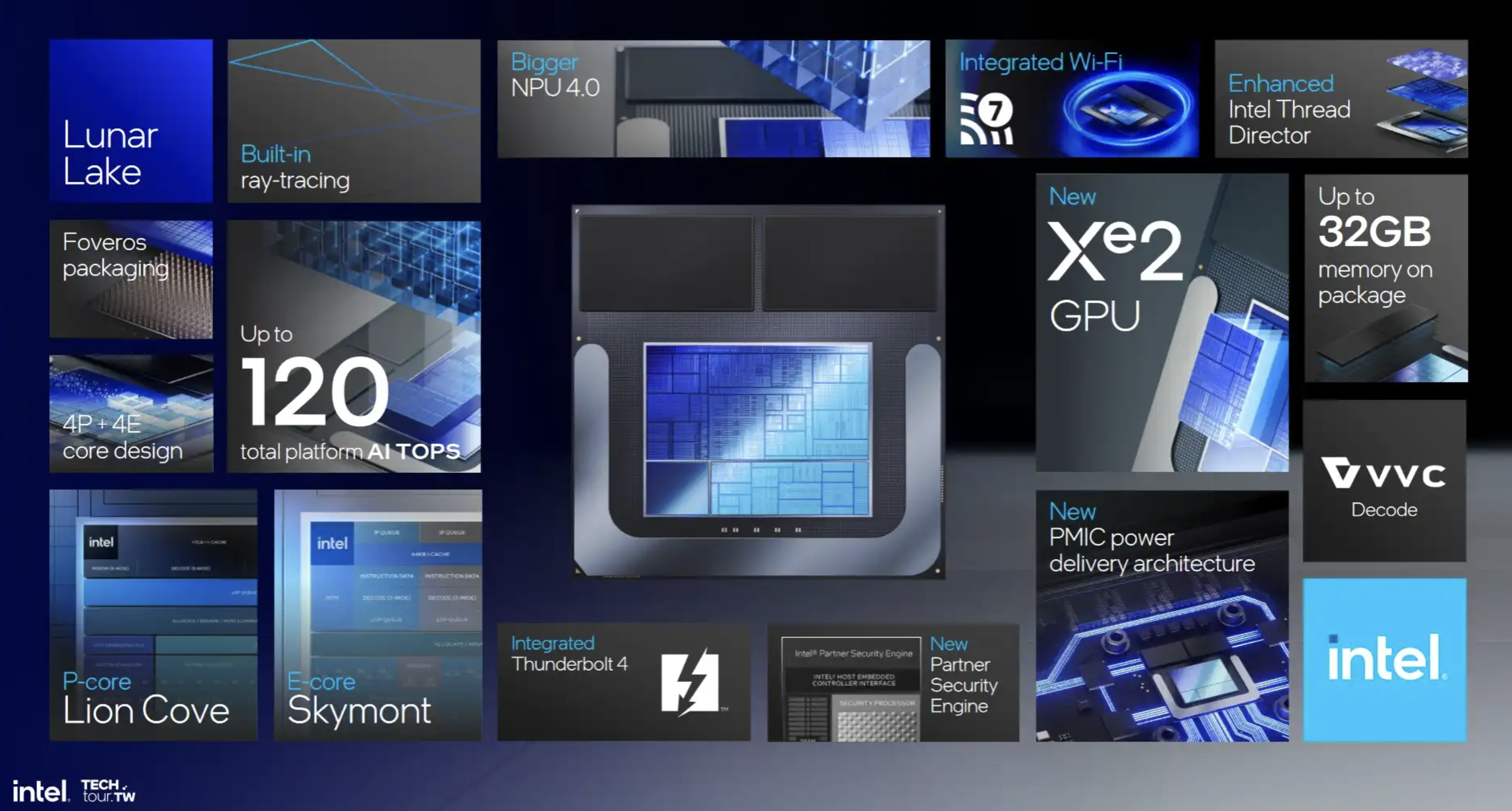
Intel’s Core Ultra 200V series represents a significant leap forward, challenging both Apple’s M-series and Qualcomm’s Snapdragon X Elite. The combination of hybrid architecture, integrated memory, and on-package AI acceleration positions Intel as a serious contender in the modern laptop processor market.
For developers, business professionals, and content creators, the Core Ultra 200V series offers multi-OS flexibility, native x86 compatibility, and on-device AI capabilities that make it a compelling choice. While the 12-core Snapdragon X Elite retains the lead in heavy multi-threaded throughput, Intel’s Core Ultra 200V proves that x86 can achieve exceptional battery life and competitive single-thread performance without compromising mobility.
The race is on, and the competition between Intel, Apple, and Qualcomm is set to push the boundaries of laptop computing further than ever before. For consumers, this means more choices and innovations as these tech giants battle for dominance in the AI-driven laptop era.
References
- Intel Corporation - Intel Core Ultra 200V Series Architecture Whitepaper, September 2024.
- Qualcomm Technologies - Snapdragon X Elite Platform Architecture Brief, June 2024.
- Tom’s Hardware - Intel Core Ultra 7 258V Review: Lunar Lake Delivers Historic x86 Battery Life, September 2024.
- AnandTech - Intel Lunar Lake Architecture Deep Dive: Lion Cove and Skymont, September 2024.
Comments powered by Disqus.