NVLink Fusion: NVIDIA's Bold Step Towards Unified AI Memory Architectures
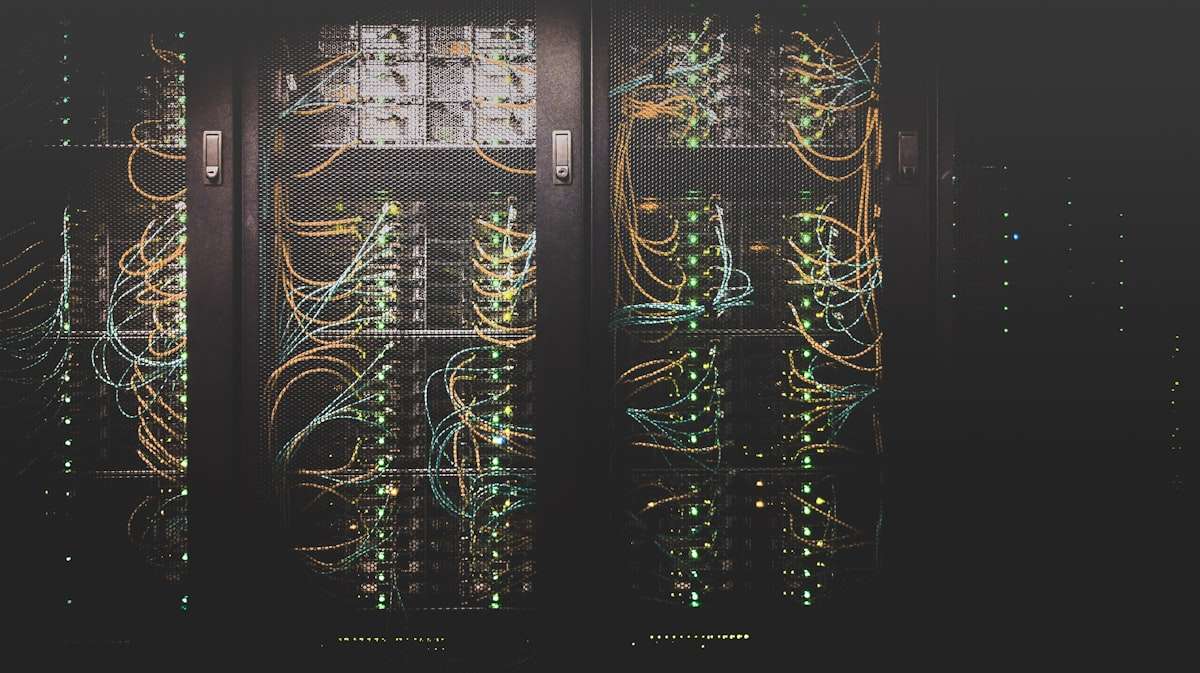
Imagine if your brain and your hands had to write letters to each other before doing anything - now imagine if they just shared thoughts instantly. That is the kind of architectural shift NVLink Fusion brings to heterogeneous computing.
At Computex 2025, NVIDIA unveiled NVLink Fusion, opening its proprietary interconnect fabric to semi-custom third-party silicon. By enabling CPUs and GPUs to share memory as a coherent address space, NVIDIA is addressing one of the most stubborn bottlenecks in hyperscale AI and scientific computing: the interconnect boundary.
This post unpacks the mechanics behind NVLink Fusion - exploring how cache coherence, memory tiers, and chiplet standards will shape the next generation of accelerated systems.
1. The Interconnect Bottleneck: Passing the Baton
In conventional accelerated systems, the CPU and GPU operate like two runners in a relay race. The CPU prepares and stages data in host memory, then passes the baton to the GPU over PCIe.
That pass - governed by explicit DMA transfers - is slow, power-intensive, and fundamentally introduces latency:
- For every compute phase, data must be serialized, copied across the PCIe bus, and mirrored in GPU memory.
- Trillion-parameter frontier models and iterative scientific simulations spend precious compute cycles stalling on bus transfers.
- Heterogeneous memory management requires developers to manually synchronize buffers across distinct address spaces.
It is like waiting for a WhatsApp message to be delivered via postal mail. NVLink Fusion is designed to eliminate that postal delay through hardware-enforced coherence.
2. What Is NVLink Fusion?
Think of your CPU as a smart planner and the GPU as a muscle-bound artist. Traditionally, the planner had to write instructions, print them, and send them to the artist across the room.
With NVLink Fusion, they sit at the same table, working off the exact same page.
In technical terms:
- NVLink Fusion establishes a cache-coherent shared address space across CPU and GPU memory.
- It enables hardware-level cache coherence, allowing both processors to access data directly across distinct physical memory tiers without manual DMA copies.
- Bandwidth? Up to 1.8 TB/s bidirectional across the GPU-to-GPU NVLink 5 fabric, and 900 GB/s over NVLink-C2C for CPU-to-GPU communication.
3. Systems Impact: Why Tighter Coherence Matters
While the initial scope of NVLink Fusion targets hyperscale datacenter clusters, tighter CPU-accelerator coherence has structural implications across the computing landscape:
Cloud AI Infrastructure:
Opening NVLink to third-party host processors allows hyperscalers to design semi-custom CPUs tailored for their specific orchestration workloads without sacrificing GPU memory bandwidth.
High-Performance Scientific Computing:
Complex drug discovery simulations, molecular dynamics, and climate modeling spend substantial time migrating sparse data structures. Coherent address spaces eliminate explicit memory pinning, accelerating iteration cycles.
Energy Efficiency:
Eliminating redundant memory copies directly reduces interconnect power consumption, yielding meaningful gains in performance-per-watt across multi-megawatt server installations.
4. Microarchitectural Mechanics: Under the Hood
For systems engineers and hardware enthusiasts, the real substance lies in the protocol layer:
Cache-Coherent Unified Address Space:
- CPU and GPU operate within a shared virtual address space while managing distinct physical memory tiers (CPU DDR/LPDDR and GPU HBM).
- Hardware page-fault handling and coherency directories eliminate manual DMA buffer copies and reduce synchronization overhead.
- Think of it as NVSHMEM semantics implemented at the silicon interconnect level.
NVSwitch Routing:
- Scaled NVSwitch fabrics act as high-radix crossbars, tracking cache line states and delivering non-blocking, multi-terabyte cross-sectional bandwidth across the node.
Smart MMU (NVMMU):
- Enables on-the-fly page migration between host memory and device HBM based on access frequency.
- Integrates cleanly with existing CUDA, NCCL, and MPI programming models.
x86 and Arm Multi-Vendor Support:
- While NVIDIA’s Grace CPU proved the viability of NVLink-C2C, NVLink Fusion broadens compatibility to third-party host architectures, marking a significant opening in NVIDIA’s historically proprietary fabric strategy.
5. Workload Acceleration Across Scale-Up Clusters
| Workload | Architectural Benefit |
|---|---|
| LLM Training & MoE Routing | Accelerates expert routing across coherent multi-GPU fabrics |
| Autonomous Simulation | Reduces latency in processing multi-sensor ingest streams |
| Climate Modeling & PDEs | Accelerates sparse grid updates without host-to-device memory stalls |
| Hyperscale Inference | Lowers latency in retrieval-augmented pipelines with shared host caches |
This coherent memory architecture builds upon NVIDIA’s DGX GB200 NVL72 supercomputers - massive systems where Grace CPUs and Blackwell GPUs communicate over NVLink-C2C and NVLink 5 switch networks. NVLink Fusion extends this proven scale-up fabric to third-party semi-custom silicon.
6. The Broader Ecosystem: Collaboration and Standards
NVLink Fusion does not exist in a vacuum. It sits alongside a broader industry push for modular, chiplet-based heterogeneous computing:
- Third-Party Silicon (MediaTek, Marvell): Early partners are designing custom datacenter host CPUs and application-specific accelerators that interface directly into NVLink networks.
- UCIe and CXL Coexistence: While CXL provides open PCIe-based coherency for general server expansion, NVLink Fusion delivers the extreme bandwidth required by frontier AI clusters. Over time, bridging fabrics will likely allow modular chiplets to interoperate cleanly.
7. Engineering Challenges in High-Speed Interconnects
Tighter coherence does not come for free. Scaling coherent fabrics introduces serious physical and protocol constraints:
- Thermal and Power Budget: Driving multi-terabit SerDes and active switch silicon consumes substantial power, demanding advanced liquid cooling solutions at the rack level.
- Signal Integrity and Routing: Routing millimeter-tolerance differential pairs across dense backplanes or optical interconnects pushes packaging tolerances to their physical limit.
- Cache Protocol Overhead: Maintaining hardware cache coherence across dozens of high-throughput processors requires sophisticated directory tracking to prevent snooping traffic from saturating the fabric.
8. What Lies Ahead
Looking ahead, two architectural frontiers will dictate the future of interconnects:
- Optical NVLink: Extending coherent fabrics across multi-rack clusters via co-packaged optics, eventually creating datacenter-wide shared memory pools.
- Architectural Echoes at the Edge: While NVLink Fusion itself is engineered for multi-hundred-watt datacenter scale-up racks, its architectural principles inspire edge silicon. The industry-wide push for unified memory hierarchies will increasingly shape robotics, autonomous platforms, and edge compute.
Conclusion
NVLink Fusion is not just a faster wire - it is an evolution in systems design. It treats the CPU and GPU as equal partners in a unified memory hierarchy rather than isolated compute islands bridged by an external bus.
Whether training frontier foundation models or simulating physical systems, the future of computing will belong to platforms that minimize data movement. It is not just about faster chips - it is about smarter systems.
References
- NVIDIA Corporation - NVIDIA Computex 2025 Keynote: Announcing NVLink Fusion for Semi-Custom Silicon, May 2025.
- NVIDIA Corporation - NVIDIA GB200 Grace Blackwell Architecture Whitepaper, 2024.
- NVIDIA Developer Zone - NVLink and NVSwitch Architecture Specification, 2024.
- Marvell Technology - Marvell Announces Collaboration with NVIDIA on NVLink Fusion, May 2025.
- UCIe Consortium - Universal Chiplet Interconnect Express (UCIe) Specification 1.1, 2023.
Author: Bhargav Achary
System engineer turned AI explorer. I write about computing architectures, machine learning, and the symphony of hardware and intelligence.
Comments powered by Disqus.